The Affirmative Action Program Is Reviewed by the
AFFIRMATIVE ACTION POLICIES THROUGHOUT HISTORY
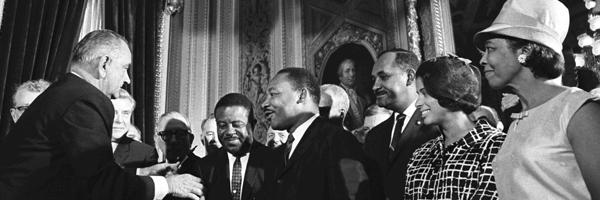
1961 – President John F. Kennedy's Executive Club (E.O.) 10925 used affirmative action for the first time past instructing federal contractors to take "affirmative activeness to ensure that applicants are treated equally without regard to race, color, faith, sex, or national origin," Established the Committee on Equal Employment Opportunity.
1964 – Civil Rights Human action of 1964 was signed into law. This was landmark legislation prohibiting employment discrimination by big employers (over 15 employees), whether or not they have government contracts. Established the Equal Employment Opportunity Commission (EEOC).
1965 – President Lyndon B. Johnson issued Due east.O. 11246, requiring all government contractors and subcontractors to accept affirmative activeness to aggrandize job opportunities for minorities. Established the Function of Federal Contract Compliance (OFCC) in the Department of Labor to administer the order.
1966 – EEOC promulgates regulations that require employers with at least 100 employees or authorities contractors with 50 employees to fill out the EEO-ane Private Sector Report annually. This study is a snapshot of how many racial and ethnic minorities and women are working in a company. 29 C.F.R § 1602.7.
1967 – President Johnson amended East.O. 11246 to include affirmative action for women. Federal contractors are at present required to make good-faith efforts to aggrandize employment opportunities for women and minorities.
1970 – The Labor Department, under President Richard M. Nixon, issued Order No.4, authorizing flexible goals and timetables to correct "underutilization" of minorities by federal contractors.
1971 – Order No. 4 was revised to include women.
1971 – President Nixon issued E.O. 11625, directing federal agencies to develop comprehensive plans and specific program goals for a national Minority Business organization Enterprise (MBE) contracting program.
1973 – The Nixon administration issued "Memorandum-Permissible Goals and Timetables in State and Local Authorities Employment Practices," distinguishing between proper goals and timetables and impermissible quotas.
1973 – President Richard M. Nixon signs the Rehabilitation Act of 1973, which requires agencies to submit an affirmative action plan to the EEOC for the hiring, placement, and advocacy of individuals with disabilities.
1978 – The U.S. Supreme Courtroom in Regents of the University of California v. Bakke, 438 U.S. 912 (1978) upheld the utilize of race as one gene in choosing among qualified applicants for admission. At the aforementioned time, it as well ruled unlawful the Academy Medical School'south do of reserving xviii seats in each entering class of 100 for disadvantaged minority students.
1979 – President Jimmy Carter issued Eastward.O. 12138, creating a National Women's Business organisation Enterprise Policy and requiring each bureau to take affirmative action to support women'due south business enterprises.
1979 – The Supreme Court ruled in United Steel Workers of America, AFL-CIO 5. Weber, 444 U.S. 889 (1979) that race-witting affirmative activity efforts designed to eliminate a conspicuous racial imbalance in an employer'southward workforce resulting from by discrimination are permissible if they are temporary and do not violate the rights of white employees.
1983 – President Ronald Reagan issued Due east.O. 12432, which directed each federal agency with substantial procurement or grant making potency to develop a Minority Business Enterprise (MBE) development programme.
1985 – Efforts by some in the Reagan administration to repeal Executive Order 11246 were thwarted by defenders of affirmative action, including other Reagan assistants officials, members of Congress from both parties, civil rights organizations and corporate leaders.
1986 – The Supreme Court in Local 128 of the Sheet Metal Workers' International Association v. EEOC, 478 U.S. 421 (1986) upheld a judicially-ordered 29% minority "membership admission goal" for a wedlock that had intentionally discriminated against minorities, confirming that courts may order race- conscious relief to correct and forestall future discrimination.
1987 – The Supreme Court ruled in Johnson 5. Transportation Agency, Santa Clara County, California, 480 U.S. 616 (1987) that a astringent under representation of women and minorities justified the apply of race or sex as "one factor" in choosing among qualified candidates.
1989 – The Supreme Court in City of Richmond v. J.A. Croson Co., 488 U.S. 469 (1989) struck downwards Richmond'due south minority contracting program equally unconstitutional, requiring that a state or local affirmative action programme be supported by a "compelling interest" and be narrowly tailored to ensure that the program furthers that interest.
1990 – President George H.West. Bush signs the Americans with Disabilities Act of 1990.
1991 – President George H.Westward. Bush signs the Civil Rights Act of 1991.
1994 – In Adarand Constructors, Inc. 5. Pena, 513 U.S. 1012 (1994) the Supreme Court held that a federal affirmative action programme remains constitutional when narrowly tailored to accomplish a compelling regime interest such as remedying discrimination.
1995 – President Bill Clinton reviewed all affirmative action guidelines by federal agencies and alleged his back up for affirmative action programs by announcing the Administration's policy of "Mend information technology, don't end it."
1995 – Senator Robert Dole and Representative Charles Canady introduced the so-called Equal Opportunity Act in Congress. The act would prohibit race- or gender-based affirmative action in all federal programs.
1995 – The Regents of the University of California voted to end affirmative action programs at all University of California campuses. Beginning in 1997 for graduate schools and 1998 for undergraduate admissions, officials at the University were no longer allowed to utilize race, gender, ethnicity or national origin as a gene in admissions decisions.
1995 – The bipartisan Drinking glass Ceiling Commission released a report on the endurance of barriers that deny women and minorities access to decision-making positions and issued a recommendation "that corporate America use affirmative activity every bit a tool ensuring that all qualified individuals accept equal access and opportunity to compete based on ability and merit."
1996 – California's Proffer 209 passed by a narrow margin in the November election. Prop. 209 abolished all public-sector affirmative activeness programs in the state in employment, education and contracting. Clause (C) of Prop. 209 permits gender discrimination that is "reasonably necessary" to the "normal operation" of public instruction, employment and contracting.
1997 – Proposition 209 enacted in California which banned all forms of affidavit activity "in the operation of public employment, public education, or public contracting."
1996 – In Texas five. Hopwood, 518 U.S. 1033 (1996) the U.Due south. Court of Appeals for the 5th Excursion ruled confronting the University of Texas, deciding that its law school'due south policy of considering race in the admissions process was a violation of the Constitution's equal-protection guarantee. The U.S. Supreme Court declined to hear an entreatment of the ruling because the programme at upshot was no longer in use.
1997 – Voters in Houston supported affirmative action programs in city contracting and hiring by rejecting an initiative that would blackball such efforts. Houston proved that the wording on an initiative is a critical factor in influencing the voters' response. Instead of deceptively focusing attending on "preferential treatment," voters were asked direct if they wanted to "end affirmative action programs." They said no.
1997 – The U.South. Supreme Court refused to hear a challenge to California'southward Prop. 209. By failing to review the case, the court did not decide the case on its claim but immune Prop. 209 to go into result.
1997 – The U.Due south. Firm Judiciary Committee voted 17-nine, on a bipartisan basis, to defeat legislation aimed at dismantling federal affirmative action programs for women and minorities. Representative George Gekas (R-Pa.), who moved to tabular array the bill, said that the bill was "useless and counterproductive. I fear that forcing the issue at this time could jeopardize the daily progress being made in ensuring equality."
1997 – Bill Lann Lee was appointed Interim Banana Attorney General for Civil Rights after facing opposition to his confirmation considering of his support for affirmative action when he worked for the NAACP Legal Defense and Educational Fund.
1997 – Lawsuits were filed confronting the University of Michigan and the University of Washington School of Law regarding their utilize of affirmative action policies in admissions standards.
1997 – In response to Hopwood 5. Texas, the Texas legislature passed the Texas Ten Percent Plan, which ensures that the top ten per centum of students at all high schools in Texas have guaranteed access to the University of Texas and Texas A&Thou system, including the 2 flagships, UT – Austin and A&M College Station.
1998 – Both the Us Business firm of Representatives and the United states of america Senate thwarted attempts to eliminate specific affirmative action programs. Both houses rejected amendments to abolish the Disadvantaged Business Enterprise program funded through the Transportation Bill, and the House rejected an attempt to eliminate apply of affirmative action in admissions in higher education programs funded through the Higher Education Human activity.
1998 – Ban on use of affirmative action in admissions at the University of California went into result. UC Berkeley had a 61% drib in admissions of African American, Latino/a and Native American students, and UCLA had a 36% decline.
1998 – Voters in Washington passed Initiative 200 banning affirmative activeness in higher education, public contracting, and hiring.
2000 – Many Excursion Courts throughout the country heard cases regarding affirmative action in college teaching, including the 5th Circuit in Texas (Hopwood), the sixth Circuit in Michigan (Grutter and Gratz), the 9th Circuit in Washington (Smith), and the 11th Circuit in Georgia (Johnson). The aforementioned District Courtroom in Michigan made ii different rulings regarding affirmative activity in Michigan, with one judge deciding that the undergraduate program was constitutional while another judge plant the law schoolhouse program unconstitutional.
2000 – The Florida legislature passed "I Florida" Plan, banning using race as a factor in college admissions. The plan also included the Talented twenty% Plan that guarantees the meridian 20% admission to the University of Florida organization.
2000 – In an effort to promote equal pay, the Us Section of Labor promulgated new affirmative action regulations including an Equal Opportunity Survey, which requires federal contractors to report hiring, termination, promotions and bounty data by minority status and gender. This is the first time in history that employers take been required to report information regarding compensation by gender and minority condition to the federal equal employment agencies.
2000 – The 10th Excursion issued an opinion in Adarand Constructors v. Mineta and ruled that the Disadvantaged Business Enterprise as administered by the Department of Transportation was constitutional because information technology served a compelling government interest and was narrowly tailored to achieve that interest. The court also analyzed the constitutionality of the program in employ when Adarand first filed suit in 1989 and adamant that the previous program was unconstitutional. Adarand then petitioned the Supreme Court for a writ of certiorari.
2001 – In Adarand Constructors, Inc. five. Mineta, 534 U.S. 103 (2001) the Supreme Court dismissed the case equally "improvidently granted", thereby leaving undisturbed the tenth Circuit's decision, which upheld the government'southward revised federal contracting program.
2001 – California enacted a new program assuasive the elevation 12.5% of high school student's admission to the UC system, either for all four years or afterward 2 years exterior the system, and guaranteeing the top iv% of all loftier school seniors' admission into the UC organisation.
2002 – The Sixth Circuit handed downwardly its decision in Grutter v. Bollinger and upheld constitutional the utilise of race as 1 of many factors in making admissions decisions at the University of Michigan'due south Police force School.
2003 – The Supreme Court handed down its decisions in Grutter 5. Bollinger and Gratz v. Bollinger. In Grutter, the Court held that the University of Michigan'south use of race among other factors in its police school admissions program was constitutional because the program furthered a compelling interest in obtaining "an educational benefit that flows from student body diversity". The Court too constitute that the police school'due south program was narrowly tailored; it was flexible and provided for a "holistic" review of each applicant. In Gratz, the Courtroom rejected the undergraduate admissions programme at the College of Literature, Scientific discipline and the Arts, which granted points based on race and ethnicity and did not provide for a review of each applicant's entire file.
2007 – Proposal two enacted in Michigan banning preferential treatment of minorities in public college admissions, public employment, public education or public contracting.
2008 – Ballot measure banning affirmative activity by public entities canonical in Nebraska, rejected in Colorado.
2008 – President George W. Bush-league signs the Americans with Disabilities Act Amendments Act of 2008, effective in 2009, that amended the American with Disabilities Act of 1990.
2011 – Arizona enacted Proffer 107 banning preferential treatment of minorities in public employment, public educational activity, and public contracting.
AFFIRMATIVE Action IN THE COURTS
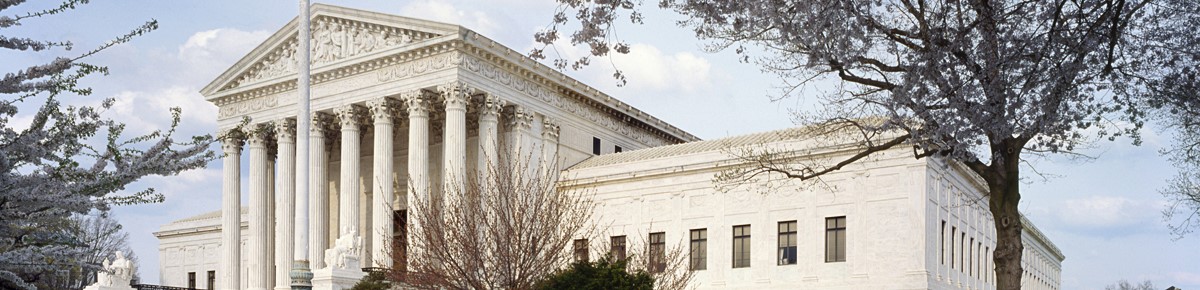
Regents of the Academy of California 5. Bakke
1978 – In Regents of the University of California v. Bakke, the Supreme Courtroom ruled that the Academy'southward special access programme setting bated a fixed number of seats for minorities at its medical school violated Title VI of the 1964 Civil Rights Act (which prohibits bigotry by federally funded programs). At the same time, however, in an opinion written past Justice Powell, it ruled that race could lawfully be considered as one of several factors in making admissions decisions. In his opinion, Justice Powell noted that lawful affirmative activity programs may exist based on reasons other than redressing past discrimination -- in item, a university'south educational interest in attaining a diverse educatee body could justify appropriate affirmative activity programs.
United Steelworkers of America v. Weber
1979 – United Steelworkers of America 5. Weber involved a new in-institute training program for workers at a Louisiana found that had hired few minorities in skilled positions. The employer and the union had agreed that fifty percent of the positions in the grooming program would become to African American employees and fifty percent to whites. Within each group, positions would be filled on the basis of seniority, meaning some inferior African Americans would be admitted ahead of more senior whites. In rejecting the claims of a white employee that the plan violated Title 7 of the 1964 Ceremonious Rights Act, the Court said the law allowed affirmative action by private parties "to eliminate traditional patterns of racial segregation". One examination of lawfulness was whether the program "unduly" trampled on the interests of white workers. The Court held that the program passed the exam because information technology did not require firing whatsoever white workers, nor did it create an "absolute bar" to white advancement. The program was also permissible because it was "a temporary measure; it [was] not intended to maintain racial balance, but simply to eliminate a manifest racial imbalance."
Fullilove v. Klutznick
1980 – In Fullilove v. Klutznick, the Supreme Court upheld a congressionally- enacted 10 percent minority business organization set-aside of federal funds for land and local public works. In the ruling, the Court stressed the remedial nature of the set up-aside, with Chief Justice Burger writing that the program "was designed to ensure that ... grantees ... would not employ procurement practices that Congress had decided might issue in perpetuation of the effects of prior discrimination which had impaired or foreclosed access by minority business concern to public contracting opportunities."
Stotts v. Memphis Burn Department
1984 – In Stotts v. Memphis Fire Department the Court took on the hard issue of whether seniority would determine the order of layoffs in the Memphis fire department fifty-fifty at the toll of wiping out affirmative activeness. Information technology ruled that Title 7 "precludes a district court from displacing a non-minority employee with seniority under the contractually established seniority system absent either a finding that the seniority system was adopted with discriminatory intent or a determination that such a remedy was necessary to make whole a proven victim of bigotry." The determination did not, however, forbid the use of affirmative action in hiring and promotion situations, as the Court patently viewed displacing white workers from their jobs as far more serious than just disappointing their hopes for a new opportunity.
Even before the ruling in Stotts, the Reagan Justice Department, under Assistant Attorney General William Bradford Reynolds, had abandoned the department'south traditionally vigorous enforcement of federal equal employment laws. In 1987 testimony earlier Congress, Reynolds said the department would end the use of whatsoever goals and timetables as a remedy to correct discrimination -- a stance the section carried into its court cases, relying well-nigh exclusively on recruitment programs every bit remedies for employment bigotry, but refusing to wait at the number of minorities or women actually hired or promoted. At the same time, Reynolds and the department sought to undo the affirmative action remedies that had been agreed to prior to the Reagan administration. Reynolds construed Stotts every bit holding that any form of race or gender-conscious relief were impermissible. These views were rejected past the courts.
Wygant v. Jackson Board of Education
1986 – The court again emphasized that lawful affirmative action programs cannot require that male person workers be discharged to make way for female workers. In Wygant 5. Jackson Board of Teaching, the Court held that a public employer may not lay off more senior white workers to protect the jobs of less senior black workers. Men and whites cannot be excluded from consideration for opportunities; all candidates must accept the chance to compete and have their qualifications compared to others.
U.S. five. Paradise and Johnson v. Santa Clara County Transportation Bureau
1987 – In U.South. v. Paradise and Johnson v. Santa Clara County Transportation Agency, the Court upheld a i-for-one promotion requirement (i.east., for every white candidate promoted, a qualified African American would besides be promoted) in the Alabama Department of Public Safe, finding it to exist narrowly tailored and necessary to eliminate the effects of Alabama'southward long-term bigotry which the lower court had found "blatant and continuous." The Justice Department, which had originally intervened in the conform in the 1970s on the side of the African American plaintiff, switched sides during the Reagan assistants.
Johnson five. Transportation Agency, Santa Clara County
1987 – In Johnson five. Transportation Bureau, Santa Clara Canton the Court upheld an employer's affirmative activity plan that immune gender to be considered equally a positive factor when choosing among qualified candidates for jobs in which women were severely underrepresented. The employer adult its plan later its review found that no women were employed in whatsoever of its 238 skilled arts and crafts jobs. Both Paul Johnson (the male plaintiff claiming reverse bigotry) and Diane Joyce (the woman who ultimately received the promotion to road dispatcher) had the requisite iv years' experience, although Ms. Joyce's experience was more than recent and arguably more relevant. Mr. Johnson received a score of 75 to Ms. Joyce'southward 73 in the graded oral interview, where 70 was a passing score. The Court upheld the county's use of Ms. Joyce'south gender as a positive gene in choosing between these similarly-qualified candidates -- peculiarly since no adult female had always held the position of road dispatcher.
City of Richmond v. Croson
1989 – By 1989, the composition of the Supreme Court had inverse and now included a potent majority of justices who were suspicious, if not downright hostile, to affirmative action. That hostility was evidenced in the Court's ruling in City of Richmond v. Croson, invalidating Richmond, Virginia's local ordinance establishing a minority business set-bated program. For the first time, the Courtroom adopted the strict scrutiny standard of review demanding that an affirmative activeness programme exist supported past a "compelling government interest" and narrowly tailored to ensure the program fits that interest. While not rejecting all governmental race- conscious remedies, the Court ready a very high standard for their continued use by state and local governments.
Adarand Constructors v. Pena
1995 – The court extended this tough standard in Adarand Constructors 5. Pena, a five-iv decision belongings that strict scrutiny would likewise apply to federal affirmative action programs (although leaving open some bug, such every bit the degree of deference to exist given to programs established by Congress). Again, still, the Court refused to pass up properly-designed affirmative action. As Justice O'Connor emphasized: "The unhappy persistence of both the do and the lingering furnishings of racial discrimination against minorities in this country is an unfortunate reality and government is not butterfingers from interim in response to it."
The court's decision in Adarand emboldened affirmative action'southward opponents to launch a full-calibration assault in Congress and in land legislatures, too as in the courts. They saw some success on the state level, as California enacted Proposition 209 in 1996, which prohibits all affirmative action programs in employment, educational activity, and contracting. The State of Washington followed suit also, with Initiative 200. The upshot of such efforts before long became clear, every bit the number of African Americans and Latinos admitted to California's top public universities quickly plummeted. Such initiatives, however, accept failed in other states. At the federal level, President Clinton immediately made articulate his determination to "mend, non end" affirmative action in light of the Adarand decision. In a speech communication at the National Archives President Clinton said, "The job of catastrophe discrimination in this State is non over." https://www.washingtonpost.com/wp-srv/politics/special/affirm/stories/aa072095.htm
The Administration's efforts paid off. Affirmative action's opponents failed in their attempts to motion legislation in the late 1990s that would have banned all federal affirmative action programs. In fact, in 1998, Congress reauthorized the disadvantaged business enterprise (DBE) programme run by the Department of Transportation (DOT) by an overwhelming bipartisan vote. This DBE program directs that non less than x% of funds appropriated for federal transportation procurement should be expended with modest disadvantaged business enterprises (more often than not owned and controlled past women and minorities; however, socially and economically disadvantaged white males are too eligible to compete in the program). The DBE program relies on a system of aspirational goals established by states and localities based on the local availability of qualified DBEs. DOT has never penalized a country or locality for failing to achieve its goals, and the program explicitly prohibits quotas.
While consistently maintaining the constitutionality of its DBE regulations, the Department of Transportation made further changes in the DBE designed to amend the program's effectiveness and tailor it fifty-fifty more narrowly in response to the 1995 Adarand decision. In the fall of 2000, the 10th Circuit agreed, concluding that the regulations satisfied strict scrutiny because they were justified by the government's compelling interest in ending discrimination against minority contractors and they were appropriately and narrowly tailored. In 2001, the Supreme Court accustomed this case for review.
Hopwood v. Texas
1996 – In Hopwood v. Texas, the Fifth Circuit dismissed Justice Powell's opinion in Bakke, ruling that a university's interest in a diverse educatee body was never compelling, and that race could no longer be used as 1 among several factors in admissions decisions in Texas, Louisiana, and Mississippi. Earlier, in 1994, a Fourth Circuit panel ruled in Podberesky v. Kirwan that race-based scholarships were unconstitutional despite all-encompassing testify offered by the land of Maryland that such scholarships were an effective ways of correcting the state's own by discrimination confronting African American students. The years 2000 and 2001 brought mixed results in the lower courts, as one commune court judge, for example, upheld the affirmative activity program used by the University of Michigan Law School, while another struck down the university's undergraduate admissions program.

Gratz v. Bollinger and Grutter 5. Bollinger
2003 – In Gratz five. Bollinger and Grutter five. Bollinger, the U.S. Supreme Courtroom handed downward its almost significant decisions in the area of affirmative activity/diversity in higher pedagogy admissions since Bakke. The Court addressed challenges to the University of Michigan'southward undergraduate and law school admissions programs respectively. In Gratz and Grutter the Court gave deference to the University'southward experience and expertise about its educational mission. However, once the University has established that its goal of diversity is consequent with strict scrutiny, the University must prove that the means it chose to attain that diversity are narrowly tailored to its goal.
Abigail Fisher 5. the Academy of Texas at Austin
2013 – The Supreme Courtroom once once more upheld the notion that diversity in college education admissions was a compelling state interest. In Abigail Fisher v. the University of Texas at Austin, the Court reiterated Justice Powell'south opinion that the consideration of race was a compelling interest where one considers the educational benefits that flow from a diverse pupil body. However, in the Fisher case it also restated previous decisions that constitute that the Academy'southward admissions process, which considers race equally a factor, must withstand strict judicial scrutiny. Moreover, in remanding the case to the lower court, the Court held that the University must evidence that such a nomenclature is "necessary . . . to the accomplishment of its purpose."
Students for Fair Admissions v. President and Fellows of Harvard Higher
Nov 17, 2014 - The organization, Students for Off-white Admissions (SFFA), and other plaintiffs filed a lawsuit against Harvard College in the District Court of Massachusetts, challenge Harvard'southward race witting admissions policy unlawfully discriminates against Asian-American applicants in violation of Championship Vi of the Civil Rights Human activity of 1964. (Harvard considers race every bit ane factor among many in its undergraduate admission process, an effort to aggrandize diversity for minority students who have been under-represented in higher instruction).
September xxx, 2019 - Estimate Allison Burroughs rejected the plantiffs' claims, ruling that Harvard does not discriminate confronting Asian-Americans or appoint in racial balancing, and that its admissions practice employ of race is consequent with Supreme Court precedent. Following this decision, SFFA filed an appeal.
November 12, 2020 - The Court of Appeals for the Outset Circuit upheld the lower court'south decision , affirming Harvard's race-conscious admissions programme does not violate Title Half-dozen of the Ceremonious Rights Human activity.
February 2021 - SFFA filed a petition for a writ of certiorari in hopes of getting the case reviewed by the Supreme Court. The petition introduces a new argument, to overturn Grutter 5. Bollinger, a 2003 landmark determination in which the Supreme Court upheld the right of college admissions boards to factor in applicant's race in order to promote student diversity.
May 17, 2021 - Harvard filed its opposing brief to take SFFA's petition rejected, noting iv decades of established legal precedent and the two lower court rulings institute in their favor.
January 24, 2022 – The Supreme Court agreed to hear SFFA five. President & Fellows of Harvard Higher, consolidated with SFFA v. University of North Carolina. Unlike Harvard, UNC is a public academy, which is covered by the 14th Amendment's guarantee of equal protection. In this example, the plaintiffs argue that the university's consideration of race in its undergraduate admissions process violates both Title VI and the Constitution.
Links:
Original Complaint
https://lawyerscommittee.org/wp-content/uploads/2020/07/Original-Complaint.pdf
District Courtroom'southward Conclusion Upholding Harvard's Race Conscious Policy
https://admissionscase.harvard.edu/files/adm-case/files/2019-10-30_dkt_672_findings_of_fact_and_conclusions_of_law.pdf
First Circuit Court of Appeals Opinion
https://admissionscase.harvard.edu/files/adm-instance/files/first_circuit_court_of_appeals_opinion.pdf
Petition for Writ of Certorari
https://world wide web.supremecourt.gov/DocketPDF/20/20-1199/169941/20210225095525027_Harvard%20Cert%20Petn%20Feb%2025.pdf
Cursory in Opposition:
https://admissionscase.harvard.edu/files/adm-case/files/legal_-_filing_-_210517_-_harvard_-_20-1199_brief_in_opposition_002.pdf
Supporting Documents: Harvard legal filings and study/Amici legal filings
https://admissionscase.harvard.edu/supporting-documents
Articles:
Harvard argues admissions suit isn't worthy of Supreme Court Review
May 17, 2021
Past Colleen Walsh, the Harvard Gazette
Harvard's Affirmative Activity Plan Upheld past the First Circuit: Victory Now But What Will Come Next? (Key Takeaways from the Showtime Circuit Determination)
Nov 17, 2021
By Audrey Anderson, Bass, Drupe & Sims PLC
How SFFA Is Trying to Convince SCOTUS To Hear Its Suit Against Harvard
March v, 2021
By Vivi E. Lu and Dekyi T. Tsotsong, Harvard Crimson
Source: https://www.aaaed.org/aaaed/History_of_Affirmative_Action.asp
0 Response to "The Affirmative Action Program Is Reviewed by the"
Post a Comment